Friday, 30 April 2010

First Month of Blogging!

It has been a month since I started this blog. I had some idea in my head as to what I wanted to achieve, but was completely unsure of the shape the blog would take, and the reception it would receive. I am immensely grateful to those who have given me encouragement. My gratitude also extends to those "silent" readers across India and the world. You readers are the life of this blog and your comments are most welcome.

In this first month I have published 13 blog posts. These posts have been viewed in 45 cities in 9 countries including 63 visits from 18 cities in India. Posts from the blog have been shared on Twitter and Facebook. All this is very encouraging and gives me lot of motivation to continue putting my thoughts via this medium.

In the coming months, I plan to continue to do more of the same. In addition, I hope to encourage more "active" participation of the readers of the blog, while at the same time increasing the visibility of this blog. The expectation is that the readers not only read and comment on the blog posts, but also write posts of their own and put it on this blog. This blog can then act as a forum for them to express their opinion and generate debate.


Thursday, 29 April 2010

Dismal Outcome of Diffuse Intrinsic Pontine Glioma


Around 10-15% of all childhood tumours of the brain are in the brain-stem. A majority of these are diffuse and infiltrating lesions of the pons called Diffuse Intrinsic Pontine Glioma (DIPG). Surgical removal of these tumours is not feasible and focal radiation in combination with experimental chemo/biologic therapeutic agents is the mainstay of treatment. Current outcomes across the world are dismal overall survival less than 10 to 15%.

In a recently published report from Tata Memorial Hospital in Mumbai, clinicians describe the outcome of 20 children with DIPG who were treated with focal radiotherapy (54 Gy in 30 fractions over 6 weeks) along with oral temozolomide during and after radiotherapy (Ref - Jalali et al, Int J Radiat Oncol Biol Phys, May 2010). This was done as a phase 2 feasibility clinical trial. Although the treatment was generally fairly well tolerated, only 35% of children were alive at 12 months after diagnosis and only 6% after 18 months.

In summary, this is one of the very few case-series on DIPG from India and the dismal outcome of these children is similar to that reported from rest of the world. I am fascinated by the complete absence of treatment refusal and abandonment in these group of patients. In a cancer, where treatment is intense and the outcome generally fatal, refusal/abandonment of treatment should theoretically be a relatively common occurrence.

Sunday, 25 April 2010

Health-Related Quality of Life in Children with Cancer

Historically, outcomes of children with cancer has been measured in terms of mortality, relapses and survival. As these QUANTITATIVE measures of life have improved in resource-rich countries, measurement of QUALITY OF LIFE (QOL) has become standard practice. For various reasons, resource-poor countries including India have under-used and under-reported these outcomes (Ref - Pandey, Psycho-Oncology, June 2004).

A recent paper reports health-related QOL outcomes in children with cancer from a physicians perspective (Ref - Chirivella et al, Indian J Pediatrics, Dec 2009). 45 patients and their physicians were recruited from two centres in Hyderabad. Using questionnaires, the physicians were interviewed for their assessment of the various HRQOL domains (sensation, vision, hearing, speech, mobility, dexterity, emotion, cognition, self-care, pain). Although its primary objective was a feasibility study, it does show an interesting (and not unexpected) observation of the pain domain having one of the lowest and most variable scores. This is in line with the recent report by Human Rights Watch which found that pain relief during palliation was sub-optimal in India.

A brief search of Medline did not reveal any other articles from India looking at health-related QOL in children with cancer. The efforts of the authors of this paper is laudable in this context. I wonder how the authors propose to progress from here?

Friday, 23 April 2010

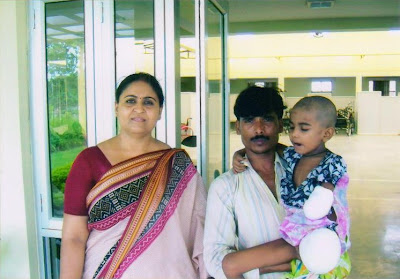
Eeshwar Child Welfare Foundation - Support Group from Lucknow

I hope to use this blog to generate awareness of the excellent work done by the various cancer support organisations in the country. I will focus on those groups which either exclusively work with children with cancer and their families, or who provide support to this group of patients along with other similar activities.


The focus of this post is on the Eeshwar Child Welfare Foundation which was set up in 2005 by Sapna Upadhyaya. They provide assistance to the children with cancer and their families who are being treated at Chhatrapati Sahuji Maharaj Medical University (formerly known as King George Medical College) in Lucknow under the care of the local paediatric oncologist, Dr Archana Kumar. In this time the have supported over 1200 children with direct medical costs (chemotherapy, diagnostic tests), indirect medical costs (food, clothing), access to social and educational services. Currently, the support group is involved in building a "Home away from Home" so that these children who travel from long distances have a suitable accommodation available for themselves and their families.


Thursday, 22 April 2010

Immunisation Practice in Children with Cancer

Immunisation (also known as vaccination) of children to provide immunity against various infectious diseases is a standard practice all over the world. Children who develop cancer, can lose the protective effect of these vaccines, mainly as a result of immunosupression from chemotherapy. These children thus need additional doses of various vaccines, which are generally given once treatment is complete. According to UK guidelines, these include additional boosters of diptheria, tetanus, acellular pertussis, injectable polio vaccine, H influenza B, meningococcal C and MMR to be given >6 months after completion of standard chemotherapy (non-myeloablative) for leukaemia and solid cancers (Ref - RCPCH Guidelines, 2002). In addition repeat BCG vaccination is recommended for those at high risk for tuberculosis and who have a negative tuberculin test after treatment.

Two interesting papers have come out in Pediatric Blood Cancer recently, in relation to this topic. The first is a survey of immunisation practices among paediatric oncology and shared care oncology consultants in UK which shows a high level of compliance with the above mentioned RCPCH guidelines (Ref - Bate et al, Pediatric Blood Cancer, July 2010). The exception to this was use of pneumococcal conjugate vaccine (which is not specified in the RCPCH guidelines) and 58% of respondents routinely administered it.

Similar guidelines are available in other European countries and North America, but none exist in resource-poor countries (and as far as I am aware there are no guidelines in India). To address this deficiency, a recent review from authors in Pakistan has given recommendations for immunisation against infectious diseases prevalent in resource-poor countries (Ref - Naqvi et al, Pediatric Blood Cancer, Jan 2010). In addition to the recommendations by RCPCH, these authors also recommend boosters for hepatitis A, hepatitis B, typhoid and varicella.

To extend the above discussion in the Indian context, it would be useful to know the practice by health professionals in India who manage children with cancer. For this purpose, I invite readers of this blog to comment on their personal practice - do they give vaccination boosters after completion of treatment to children with cancer; what boosters are the children given; how long after completion of the treatment are these boosters given; and any other comments.