Showing posts with label guidelines. Show all posts

Monday, 11 June 2018

Umbilical Cord Blood Banking in India - A Complete Rip-Off


Why is Umbilical Cord Blood Important?

The blood in the umbilical cord us a source of STEM CELLS. These are special cells which have the ability to grow and develop into many different cell types in the body. They are thus of use in many diseases including cancer.

Then should one not store their umbilical cord blood?

The answer to this is Yes and No. The idea to store umbilical cord blood is a good one. The problem is that those who are storing and paying for storing it are being misled. They are assuming that this umbilical cord blood would be of use to them in the future. This is far from true. The chance that the umbilical cord blood stem cells would be used by those who donated them is 1 in 1000 to 1 in 200,000.

So who is misleading us?

We are being misled by false advertising and marketing of companies who bank umbilical cord blood as a for-profit private enterprise i.e. PRIVATE CORD BLOOD BANKING. We are being misled by the celebrities who endorse this practice. We are being misled by those doctors who promote this practice.

So is all umbilical cord blood banking bad?

No, banking umbilical cord blood in PUBLIC CORD BLOOD BANKS is good and is likely to be of much more use. Please see below a list of public sector cord blood banks.

Where can I get further information?

Also, if you want more detailed information on this from an unbiased source, please click on this link which is the Indian Academy of Pediatrics position statement on umbilical cord blood banking

Tuesday, 6 April 2010

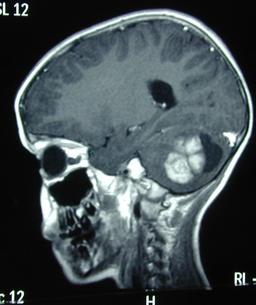
Enabling Timely Diagnosis of Brain Tumours in Children


Worldwide, tumours of the brain (and other parts of the central nervous system) constitute nearly 25% of all childhood cancer (second only to acute leukaemias). Their incidence in India is lower and this is partly related to underdiagnosis as a result of inadequate neuro-radiological and neuro-surgical facilities (Ref - Arora et al, Indian Journal of Cancer, Oct-Dec 2009)

Presenting features of the brain tumour depend on the age of the child as well as the location of the tumour in the brain. However, they can be varied and include headache, nausea/vomiting, visual changes, motor changes, seizures, altered sensorium and others. The non-specificity of some of these symptoms can lead to a delay in parents seeking medical advice and in physicians reaching a diagnosis. These delays can have negative impact on outcomes.

The Children's Brain Tumour Research Centre in Nottingham University has developed evidence-based guidelines to help clinicians recognise and diagnose brain tumours in children in a timely fashion. These guideline have application across all settings and populations including in the Indian context and deserve to be widely disseminated.