Showing posts with label diagnosis delays. Show all posts

Tuesday, 10 March 2020

Podcast on perspectives of caregivers of children with cancer in India on their journey to accessing timely cancer diagnosis and treatment


I am glad to share a podcast https://www.ghccpod.com/22-the-labyrinth/ was conducted by Dr Mark Zobeck based on one our recent pieces of work in trying to understand the experiences of the caregivers of children with cancer in India as they obtain their diagnosis and start treatment.

I quote from his link

How does a child with cancer in India access care?
If you’ve ever had an illness that was difficult to diagnose, you know that navigating the medical system can be incredibly frustrating. Bouncing back and forth between doctors, taking time off of work or school, waiting for hours upon hours, all while you don’t feel well and do not know what is going on with your body is enough to drive anyone crazy. Unfortunately for families of children with cancer, they know this feeling all too well. Childhood cancer can be very difficult to diagnose and the journeys that families undergo to find answers and receive care can be long and grueling. 
To better understand these journeys, Drs. Neha Faruqui, Ramandeep Arora, and their colleagues have studied what they call the “healthcare labyrinth” of accessing childhood cancer care in India. Through discussions with parents and caregivers, they classified the major themes that contribute to difficult or prolonged paths to care. Today on the podcast, we will discuss their findings from their many hours of listening to the families’ stories. 
I would encourage anyone listening to the podcast to also read their paper. As I say in the podcast, it reads more like a novel than a journal article, and I found myself emotionally invested in the way the parents described their journeys. It made me appreciate anew how important it is to establish robust health systems that can rapidly identify patients and refer them to appropriate tertiary care.
Lastly, this discussion is not meant to be a criticism of the Indian healthcare system. It is an enormous system that is responsible for caring for 1.3 billion people! There are many things it does very well! But of course, there are things that can be improved. As Dr. Arora says in the episode, this paper, and our discussion is about listening to the caretakers to discover how providers everywhere can better care for not only the patient during treatment but for the entire family through the entire cancer experience. 

Tuesday, 15 April 2014

Amaan Shah Foundation for Child Cancer

Amaan Shah is a 11 year old boy from Andhra Pradesh who was diagnosed with Burkitt's lypmphoma. Very sadly, he died while undergoing treatment. His mother very poignantly describes his journey - as only mothers can and I would strongly recommend all us health professionals and parents to read it. It brings to our attention the familiar challenges of delay in recognising the symptoms and diagnosis, the lack of referral pathways, the toxicity of treatment, the inadequate palliation of symptoms, and above all the large vacuum of information and guidance.

Amaan's parents have very bravely and courageously decided to join the cause of children with cancer and set up a foundation in his name Amaan Shah Foundation for Child Cancer. Amaan's mother Asma Pasha says "I don't want all our efforts to go waste, specially MY SON'S... I want to get strong with my emotions and lead for a good cause. What my son..me..my whole family has faced.. i wish and pray Almighty no parents and children should face that. well its all Almighty's command but still our efforts can make a difference".


I sincerely admire how Amaan's family is trying to turn personal loss and grief into a force for change. I wish them all the best.

Saturday, 15 February 2014

International Childhood Cancer Day

The 15th of Feb i.e. today is the International Childhood Cancer Day. It is an opportunity to raise awareness of children who have cancer and also to advocate for change. One of the huge challenges facing developing countries including India is timely diagnosis, referral and treatment. Lack of awareness among parents as well as health professionals hampers timely presentation. Absence of clear referral pathways further delays the diagnosis and treatment. The child and its family often stagger from hospital to hospital, city to city before hopefully reaching an appropriate treatment centre. Besides the cost and frustration for the family, a delayed presentation is often linked with advance stage at presentation, particularly in solid tumours. This adversely affects the outcome with greater treatment intensity, greater supportive care, greater costs, greater treatment toxicity, greater treatment abandonment rates and poorer outcomes.

The focus of various international (SIOP, UICC, ICCCPO) and national (Cankids...Kidscan) organisations this year is on Access to Care and as part of the access to care Campaign, early warning signs posters created jointly by SIOP/ICCCPO and the International Union for Cancer Control (UICC) have been translated into Hindi, Marathi, Bengali, Gujarati, Tamil and Malyalam by Cankids. In addition, Cankids have also released a site map of centers where children are being treated for cancer in India.


Early Warning Signs of Cancer in a Child


Treatment Centres in India


Friday, 15 March 2013

Leukaemia mis-diagnosed

We know that childhood cancer is underdiagnosed in resource-limited settings. Patients presenting with leukaemia who have fever and anemia may be misdiagnosed as malaria, those with seizures and space-occupying lesion may be mis-diagnosed as tuberculoma or neurocysticercosis, etc. I have however not found a lot of evidence which investigates this phenomenon.

Then I came across this blogpost on Alex's Lemonade Stand Foundation which talks about Dr Terry Vik's work  While reading 3000 slides for suspected malaria in children in Kenya, a trained technician picked up 5 possible cases of leukaemia. The study is in its early stages yet and I keenly look forward to its conclusion.

Tuesday, 6 April 2010

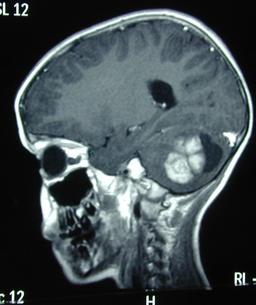
Enabling Timely Diagnosis of Brain Tumours in Children


Worldwide, tumours of the brain (and other parts of the central nervous system) constitute nearly 25% of all childhood cancer (second only to acute leukaemias). Their incidence in India is lower and this is partly related to underdiagnosis as a result of inadequate neuro-radiological and neuro-surgical facilities (Ref - Arora et al, Indian Journal of Cancer, Oct-Dec 2009)

Presenting features of the brain tumour depend on the age of the child as well as the location of the tumour in the brain. However, they can be varied and include headache, nausea/vomiting, visual changes, motor changes, seizures, altered sensorium and others. The non-specificity of some of these symptoms can lead to a delay in parents seeking medical advice and in physicians reaching a diagnosis. These delays can have negative impact on outcomes.

The Children's Brain Tumour Research Centre in Nottingham University has developed evidence-based guidelines to help clinicians recognise and diagnose brain tumours in children in a timely fashion. These guideline have application across all settings and populations including in the Indian context and deserve to be widely disseminated.