Saturday, 15 August 2020

Cancer and Childhood Cancer Care in India – FIVE reasons why I am POSITIVE and MOTIVATED on our 74th Independence day


Today we complete 73 years of our independent existence and celebrate our 74th Independence day. The strides we have made as a nation are truly enormous and are acknowledged widely. At the same time, the challenges which remain are no less mighty and we need to continue on the path of relentless progress to overcome hunger, poverty, ill health, strife, pollution, among others.
At this time I reflect on the cancer and childhood cancer care in India, and despite the many challenges which we face in this area, I have found FIVE reasons why I as a pediatric oncologist am POSITIVE and MOTIVATED on this day and look forward to the coming year and decade with great anticipation.

REASON ONE – WHO Global Initiative for Childhood Cancer (GICC)
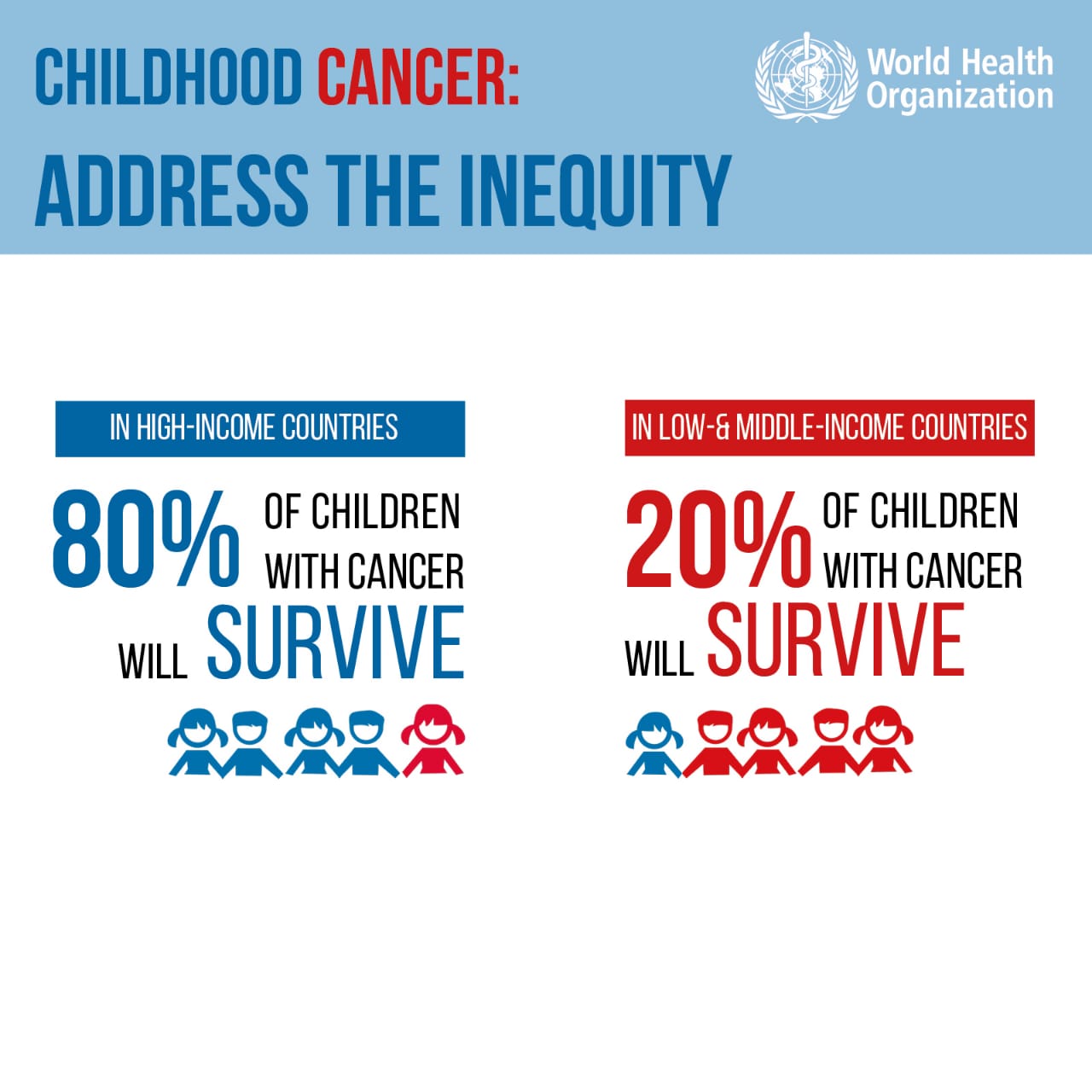
Active involvement of the WHO and launch of the GICC in 2018 (https://www.who.int/cancer/childhood-cancer/en/) has been a landmark development for all stakeholders in pediatric oncology across the world. Work has already started in several countries including Myanmar which is in the South Asian region. Some work has also begun in India last year with meetings with the professional societies and the parent groups. This year, the Ministry of Health and Family Welfare, Government of India along with the WHO SEARO office have selected 4 centres (BBCI Guwahati, Kidwai Hospital Bangalore, Kalawati Saran Hospital New Delhi and Tata Memorial Hospital Mumbai) to be National Centres of Excellence for Childhood Cancer services. Many more activities and initiatives will follow to help India reach the target of 60% survival rate for children with cancer by 2030.

REASON TWO – National Cancer Grid (NCG)
For too long we have had a plethora of national societies in all spheres of medicine including oncology and pediatrics, which seem to exist from meeting to meeting, seminar to seminar. Most professional medical societies in India have not taken up the cause of the patient, and addressed the deficiencies in healthcare in a big way. Enter National Cancer Grid (https://tmc.gov.in/ncg/) in 2012 – today it is a network of >200 major cancer centers, research institutes, patient groups and charitable institutions across India. Led very ably by Dr CS Pramesh it has launched and successfully executed a host of collaborative activities – Disease Management Group specific Virtual Tumour Boards, Online second opinion service through Navya, CRedO Workshop for researchers, are just a few of the many initiatives which are ongoing or in development.

REASON THREE – Indian Pediatric Oncology Group (InPOG)
Multicentre collaborative research is critical if India wants to make progress in the care and outcomes of its children with cancer. InPOG (https://www.phoindia.org/cms/inpog-faqs) has been active since the beginning of 2015 and as of December 2019 (in five years) 5543 patients have been recruited in 15 studies (40% interventional and 60% non-interventional studies) from 90 centres. It now enters into its next phase and promises faster and greater developments.

REASON FOUR – Cankids
Driven by the relentless energy of its founder Poonam Bagai, Cankids (https://www.cankidsindia.org/) has blazed the trail in India as well as globally, showcasing how patients, parents and civil society can contribute to childhood cancer care. They not only provide vital social and psychological support for children with cancer and their families, but are leading engagement with state governments on Change for Childhood Cancer in India (http://childhoodcancerindia.blogspot.com/2017/09/supporting-childhood-cancer-treatment.html) and have done a phenomenal amount of work during COVID-19 ensuring that the treatment of patients is not disrupted.

REASON FIVE – Max Healthcare and Max Institute of Cancer Care
My workplace and my employer (https://www.maxhealthcare.in/) have consistently demonstrated, never more than now in these COVID-19 times, that it is possible to deliver high quality care to cancer patients while balancing social responsibility and driving academics and research in the private sector. Solving India’s healthcare challenges would need partners in all sectors of healthcare and Max has shown the way. Thank you Mr Abhay Soi and Dr Harit Chaturvedi for your inspirational leadership
-->

Thursday, 30 July 2020

Childhood cancer survivorship and late effects: The landscape in India in 2020

Cure from childhood cancer is now a justifies expectation and with the right treatment most children would get cured of their cancer and achieve long-term survival. While the goal is that this long-term survival is normal, experience has taught us that some survivors suffer from late side-effects. This has been an area of intense focus in the last few decades and there is now growing evidence on how to prevent and treat these late side-effect.

So far, the information from India has been limited and scattered. We mad an attempt to bring this all together and are happy to share our recent publication on this in the Pediatric Blood Cancer - Childhood cancer survivorship and late effects: The landscape in India in 2020

We highlight not only the steadily increasing work going on with childhood cancer survivors in the hospitals, but also the efforts taken by healthcare providers, and other stakeholders in developing this service, advocating for this cause and providing survivors with a platform. A special mention of two such organisations - Ugam and Cankids - who contributed to this effort.

Sunday, 19 July 2020

COVID-19 Pandemic and Childhood Cancer

None of us has ever seen anything like this before. And I am not talking about a viral infection. I am talking about the emergence of a new infection and the global and national response to it which has been without parallel. Over the last few months not only has the infection affected the health of millions and taken the lives of hundreds of thousands, it has brought the world to a HALT! Individuals, businesses and countries have borne the brunt of it and continue to do so.

It will be some time before this comes to pass. Meanwhile children with cancer (like those with many other illnesses) have been caught in this maelstrom with impact on their diagnosis, their treatment and eventually outcomes. In the face of such ongoing challenges, the global and the national pediatric oncology community has got together to respond on multiple fronts in many different ways.


The Global COVID-19 Observatory and Resource Center for Childhood Cancer is one such effort. Developed by SIOP and St Jude Global, this Resource Centre provides all relevant information to those caring for children with cancer including parents and families. The reader is encouraged to browse the website for further information.

Specifically I wanted to highlight two things.

Firstly, are the weekly COVID Conversations - a live webinar to discuss difficult issues, address pressing questions, and hear the experiences of our colleagues when it comes to caring for children with cancer during this pandemic. Several such Conversations have happened with one specifically relating to Experiences in India and Pakistan.

Secondly, is the Global Registry of COVID-19 in Pediatric Cancer which provides a visualisation of the impact of the virus on our patient population.

Tuesday, 10 March 2020

Podcast on perspectives of caregivers of children with cancer in India on their journey to accessing timely cancer diagnosis and treatment


I am glad to share a podcast https://www.ghccpod.com/22-the-labyrinth/ was conducted by Dr Mark Zobeck based on one our recent pieces of work in trying to understand the experiences of the caregivers of children with cancer in India as they obtain their diagnosis and start treatment.

I quote from his link

How does a child with cancer in India access care?
If you’ve ever had an illness that was difficult to diagnose, you know that navigating the medical system can be incredibly frustrating. Bouncing back and forth between doctors, taking time off of work or school, waiting for hours upon hours, all while you don’t feel well and do not know what is going on with your body is enough to drive anyone crazy. Unfortunately for families of children with cancer, they know this feeling all too well. Childhood cancer can be very difficult to diagnose and the journeys that families undergo to find answers and receive care can be long and grueling. 
To better understand these journeys, Drs. Neha Faruqui, Ramandeep Arora, and their colleagues have studied what they call the “healthcare labyrinth” of accessing childhood cancer care in India. Through discussions with parents and caregivers, they classified the major themes that contribute to difficult or prolonged paths to care. Today on the podcast, we will discuss their findings from their many hours of listening to the families’ stories. 
I would encourage anyone listening to the podcast to also read their paper. As I say in the podcast, it reads more like a novel than a journal article, and I found myself emotionally invested in the way the parents described their journeys. It made me appreciate anew how important it is to establish robust health systems that can rapidly identify patients and refer them to appropriate tertiary care.
Lastly, this discussion is not meant to be a criticism of the Indian healthcare system. It is an enormous system that is responsible for caring for 1.3 billion people! There are many things it does very well! But of course, there are things that can be improved. As Dr. Arora says in the episode, this paper, and our discussion is about listening to the caretakers to discover how providers everywhere can better care for not only the patient during treatment but for the entire family through the entire cancer experience.