Monday, 11 April 2022

SAFER Ukraine - The Power of the Global Pediatric Oncology Community

For the last few weeks, we have all watched with horror at the unfolding events in Ukraine. The casualties of war are not only the armed forces personnel, but also civilians (men, women and children) in Ukraine who have been caught in the cross-fire and the bombings of residential areas, theatres, markets and even hospitals.

According to https://en.wikipedia.org/wiki/2022_Ukrainian_refugee_crisis "More than 4.5 million refugees have since left Ukraine (as of 9 April 2022), while an estimated 6.5 million people have been displaced within the country (as of 18 March 2022). In total, more than ten million people – approximately one-quarter of the country's total population – had left their homes in Ukraine by 20 March. By 24 March 2022, according to UNICEF, more than half of all Ukrainian children had been forced to leave their homes."

Through these incredibly difficult times, there are many examples of individuals and groups which have come forward to the aid of the Ukrainian citizens.  One such example is the SAFER UKRAINE initiative which stands for Supporting Action For Emergency Responses in UKRAINE and has been set up by St Jude Global along with multiple partners from the global pediatric oncology community including SIOP (International Society of Pediatric Oncology) and CCI (Childhood Cancer International).


SAFER Ukraine has established a virtual command center to coordinate evacuations and ensure treatment continues for pediatric oncology patients. The process includes determining transportation logistics and identifying high-risk patients who are deteriorating. The SAFER Ukraine team and volunteers translate medical records, coordinate departure travel and manage the logistics of transport across the border. In addition to the above efforts, the team also established a triage clinic in Poland. Patients and their families can rest and recover from the evacuation while awaiting assignment to a clinic for continued treatment.

Through these efforts, more than 800 Ukrainian children with cancer have been registered and over 500 have been transferred to clinics in Poland, Germany, Italy, Netherlands, France, Spain, United Kingdom, Czech Republic, Austria, Switzerland, Canada and USA. In my 15 years of experience of engaging with the global pediatric oncology community (which has always been sensitive to healthcare disparities and has continually worked to improve the outcomes of those in resource-limited settings) such a concerted advocacy and humanitarian effort is unprecedented and I can only applaud and wish them well. 
 

Tuesday, 15 March 2022

Dinutuximab (Anti GD2 therapy) for children with high risk neuroblastoma now available in India

 High risk neuroblastoma continues to be a childhood cancer which is challenging to treat and has poor outcomes. While smaller increments in survival have been made over the years, a big step-up in survival was when Anti-GD2 therapy (now known as Dinutuximab) was introduced and this was published by Yu et al in this landmark study. I had written a blog on this in 2010 and also reflected on the Indian situation. Since then Dinutuximab has become the standard of care for high risk neuroblastoma in high-income countries.

Low and middle income countries like India have not had access to the medicine, either through clinical trials, or through compassionate use. This has now changed and the first child received Dinutuximab in Mumbai last year and this was covered in the media - Mumbai child receives special injection to treat rare cancer. Subsequent to this, I have been informed that another child has received this treatment in Bangalore and there are a few others waiting to receive it.

While this is exciting and welcome, it is important to point out that AVAILABILITY does not equate to ACCESSIBILITY. And the main reason for that in this context is AFFORDABILITY. This drug is not manufactured in India but imported from Europe. Based on the information available to me, a child who weighs around 13 kg will need 3 vials per cycle and a total of 15 vials for 5 cycles. With each vial 11,000 Euros, the total cost is approximately INR 1.4 cr + 25% custom duties. With the right kind of paper-work and eligibility for discount, the custom fees may be waived off and the price of the drug could come down to INR 56 lakh. But this still remains out of reach of almost all children with high risk neuroblastoma in India.

In conclusion, it is a welcome positive step that Dinutuximab in now available in India. With time and increased use, we hope and expect the price to be driven down so that it becomes accessible to more children who need it.


Monday, 28 February 2022

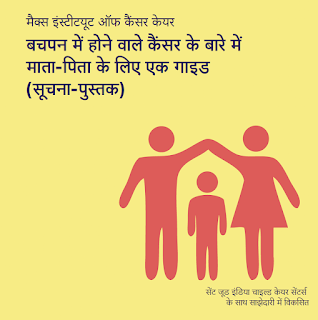
A Parents Guide to Childhood Cancer - The Max Institute of Cancer Care Version

When a child is diagnosed with cancer, the family faces a variety of new medical terms and challenges. It is vital that parents understand the many aspects of the illness and treatment, as well as the experiences they may face and have to cope with during the treatment process. At such times, consistent, repeated and reliable information is invaluable. One way to deliver this is through written information in simple language targeted at parents and carers. There are many resources available online - here are two of my favourite ones - The Children's Oncology Group Family Handbook and the Children's Cancer and Leukemia Group Parents Guide. 

I had not been able to find a similar good resource targeted at parents of children with cancer in India till I came across and excellent resource made by St Jude India ChildCare Centres and the clinical team at Tata Memorial Centre, Mumbai. With their permission we have now adapted for the use of our parents whose children are being treated at Max Institute of Cancer Care. They are available in English and in Hindi.


Thursday, 15 October 2020

Milestones in Childhood Cancer Collaborative Research - Part 2

The 21st century has see the emergence of multi-centre collaborative research from low and middle income countries with reports from Central America, Africa, China and India. This is a very welcome development and I will briefly describe some of these initiatives below. But I would like to start with Brazil where cooperative groups for childhood cancer started in the 1980s.

The Brazilian Experience

The Cooperative Groups Initiative in Brazil started in 1980, allowing exchange of expertise and proposals of better care. There are seven well-established cooperative groups with ongoing protocols including the participation in international studies. Among their earliest works which was published in 1991 was the randomised controlled study on Single‐dose versus fractionated‐dose dactinomycin in the treatment of wilms' tumor with no significant difference in overall or relapse‐free survival. Shortly afterwards, they published the Treatment results of three consecutive Brazilian cooperative childhood ALL protocols: GBTLI-80, GBTLI-82 and -85 and were able to examine the role and dose of cranial radiation as well as treatment intensification.

For further reading - Brazilian Society of Pediatric Oncology - SOBOPE: 30 years of history, a lot in the present, full of the future and Pediatric hematology oncology in Brazil

Francophone Africa - The French‐African Pediatric Oncology Group (GFAOP)


The Franco-African Childhood Cancer Group (French acronym, GFAOP) was founded in 2000 with aim of improving the outcomes of children with cancer in Africa. The GFAOP has developed two forms of action. The main form consists of organizing two- to twelve-month training sessions for physicians and nurses in France and Morocco. The other form involves assessing the feasibility of modern treatment protocols for various cancers in Africa. The first feasibility trials were carried out on nephroblastoma and Burkitt's lymphoma in 12 pilot units in North Africa, West Africa, and Madagascar. In the first study from 2001 to 2004, 306 children of Burkitt's lymphoma using French LMB protocols adapted to the African setting and achieved a survival rate of 61% - Treatment of B‐cell lymphoma with LMB modified protocols in Africa—report of the French‐African Pediatric Oncology Group (GFAOP).

The SIOP PODC Africa Wilms Tumour Project

This project is implementing a SIOP PODC adapted treatment guideline for Wilms tumour in several centres in sub-Saharan Africa. This is done as a multi centre prospective clinical trial with uniform outcome evaluation. The project started in 2014. More than 300 patients have been included and treated. End of treatment survival without evidence of disease increased from 52% to 68%. Death during treatment decreased from 21% to 13% and abandonment of treatment from 23% to 13% - Improved outcome at end of treatment in the collaborative Wilms tumour Africa project


For further reading - 
The Collaborative Wilms Tumour Africa Project; baseline evaluation of Wilms tumour treatment and outcome in eight institutes in sub-Saharan Africa

 Asociación de Hemato‐Oncologiá Pediátrica de Centro América (AHOPCA)

Inspired by the twinning program of Manuel de Jesus La Mascota Hospital in Managua, Nicaragua and the Pediatric Clinic of the University of Milano‐Bicocca in Monza, Italy as well as the subsequent establishment of the Monza International School of Pediatric Hematology‐Oncology (MISPHO), the Asociación de Hemato‐Oncologiá Pediátrica de Centro América (AHOPCA) was formed in 1998. Initially this consisted of Guatemala, Honduras, El Salvador, Nicaragua, and Costa Rica. Panama joined in 2001 and the Dominican Republic in 2006

There are several other regional and national initiatives in pediatric oncology collaborative research in LMIC which have blossomed in recent years e.g. the Turkish Pediatric Oncology Group, The Pediatric Oncology East and Mediterranean (POEM) network and others. We look forward to seeing their work in the future. I would like to now focus on China and India, which together would constitute nearly a third of the childhood cancer burden. And so both of these countries have to strengthen their collaborative research so that they individually and the world collectively can aspire to reach the WHO Global Initiative for Childhood Cancer target of at least 60% survival by 2030.

The Chinese Experience

There are two national collaborative groups within China. The Chinese Children Leukemia Group (CCLG) started the CCLG-ALL 2008 Study. A total of 2231 patients were recruited from 10 hospitals across the country from 2008 to 2013 - 
Outcome of children with newly diagnosed acute lymphoblastic leukemia treated with CCLG-ALL 2008: The first nation-wide prospective multicenter study in China. More recently, the Chinese Children Cancer Group (CCCG) which was formed in In 1997 under the China Anti-Cancer Association, has organized one of the largest clinical trials in China, the CCCG-ALL-2015 Study. The study is led by the National Center for Children’s Health (Shanghai) and supported by St Jude Children’s Research Hospital and the VIVA Foundation. Up to January 2019, and 6024 patients were recruited into the study.


For further reading - Treatment of childhood cancer in China: Current status and future direction

Indian Pediatric Oncology Group (InPOG)


The earliest report of collaboration in the field of pediatric oncology in India was that between Cancer Institute, Chennai and the National Cancer Institute, USA in the early 1980s. Adopting a more intense protocol (MCP841) than that being used at the time, led to an improvement in the event free survival of acute lymphoblastic leukemia from 20% to 40%. This treatment strategy was then adopted by Tata Memorial Hospital, Mumbai in 1986 and All India Institute of Medical Sciences, New Delhi in 1992. With this common protocol, event free survival rates of 40-60% were achieved - Treatment of acute lymphoblastic leukaemia in countries with limited resources; lessons from use of a single protocol in India over a twenty year period.

The need to establish a national cooperative group in order to develop prospective multi-centre clinical trials in India became increasingly apparent. Such a strategy was critical to understand the biological differences in the disease, to assess responses to treatment and ultimately to improve childhood cancer survival in India. Active since 2015, the mission of InPOG is to improve the outcomes of children with cancer in India by collaborative research. At present here are 26 disease and discipline subcommittees with a portfolio of 31 studies.


The InPOG-HL-15-01 was amongst the first studies to start recruitment and standardised therapy of children with Hodgkin disease on an ABVD backbone – InPOG-HL-15-01 - Challenges and lessons learnt in setting up the first collaborative multicentre prospective clinical trial in childhood cancer in India.  Initial results are expected to be published next year.


For further reading - Indian Pediatric Oncology Group (InPOG) - Collaborative research in India comes of age


The future looks very exciting. May this momentum gather an even greater speed!

Wednesday, 16 September 2020

Milestones in Childhood Cancer Collaborative Research - Part 1

September is Childhood Cancer Awareness Month and it is a good time to reflect on the progress we have made in curing childhood cancer and how we got here. An important part has been the ability of all stakeholders to get together and enroll children with cancer on to clinical trails, specially multicentre collaborative research. In this first part I look at some of the earliest works done in North America and Europe and highlight a few studies.

This all started in 1948 when Sidney Farber attempted to use a folate antagonist, Aminopterin to block the function of folic acid in patients with acute leukemia in hopes of achieving remission - Temporary remissions in acute leukemia in children produced by folic acid antagonist, 4-aminopteroyl-glutamic acid. Of 16 children, 10 demonstrated clinical, hematological and pathological evidence of improvement for three months. At that time this observation was met with disbelief and also it was felt to be unethical to "experiment" with the life of a child with leukemia when cure was not possible.

Thankfully, he and others like him continued in their efforts. The relative rarity of the disease and the need for shared expertise in management led to the creation of the first pediatric oncology co-perative groups (Cancer and Leukemia Group B Cooperative Group as well as the Acute leukemia Chemotherapy Cooperative Study Group A) in the US in 1955 which were the forerunners of the now well established and respected Children's Oncology Group. For the last 65 years, COG in North America and SIOP in Europe  have increased our knowledge and understanding of childhood cancers and conducted studies which have improved outcomes. Here are some of the earliest studies:


Childhood Leukemia


Published by Heyn et al in 1960, The Comparison of 6-Mercaptopurine with the Combination of 6-Mercaptopurine and Azaserine in the Treatment of Acute Leukemia in Children: Results of a Cooperative Study was the first multi-centre co-operative clinical trial in childhood cancer. In 125 cases of previously untreated acute leukemia in children, no significant difference was seen in the percentage of complete remissions obtained when 6-mercaptopurine was used alone or when 6-mercaptopurine and azaserine were used in combination. The median duration of the complete remissions for the combination therapy was 4.12 months compared to 2.75 months for 6-mercaptopurine alone and the difference was not statistically significant.

At the same time, Freireich et al studied 6-Azauracil in patients with "advanced" acute leukemia, refractory to standard chemotherapy - Evaluation of a New Chemotherapeutic Agent in Patients with "Advanced Refractory" Acute Leukemia. Studies of 6-Azauracil. Under the conditions of the study this compound was found to have no significant antileukemic activity.

Two decades later, in 1980, the first collaborative efforts in childhood ALL from Europe were published on children treated on the BFM 70/76 protocol - The Berlin Childhood Acute Lymphoblastic Leukemia Therapy Study, 1970–1976. The treatment protocol consisted of vincristine, prednisone, daunorubicin, L-asparaginase, cyclophosphamide, cytarabin, 6-mercaptopurine, intrathecal methotrexate, and cranial or craniospinal irradiation. Maintenance therapy was cyclic sequential administration of intravenous methotrexate and oral 6-mercaptopurine with 6-week reinduction pulses of prednisone/vincristine. 56.2% of patients were in complete continuous remission for a median of 67 months.


Childhood Solid Tumours


Following the work on childhood leukemia, cooperative groups simultaneously also started looking at solid cancers. Earliest work was done on Wilms tumour on both sides of the Atlantic.

Published in 1968, maintenance dactinomycin following surgery was found to be superior (continued remission rate of 86%) compared to when no maintenance was given (continued remission rate of 48%) - Single versus multiple dose dactinomycin therapy of Wilms's tumor. A controlled co-operative study conducted by the Children's Cancer Study Group A (formerly Acute Leukemia Co-operative Chemotherapy Group A)

Colleagues in Europe investigated the role of radiotherapy and actinomycin d (dactinomycin) in Wilms tumour - Preoperative versus postoperative radiotherapy, single versus multiple courses of actinomycin d, in the treatment of Wilms' tumor. Preliminary results of a controlled clinical trial conducted by the international society of paediatric oncology (S.I.O.P.). This was the first SIOP study and also the first international randomized trial in Europe. Pre-op radiotherapy reduced the tumour rupture rate at surgery. Also there was no added benefit of post-op radiotherapy after receiving pre-op radiotherapy. 

Childhood CNS Tumours


It was in 1990, that the first multicentre co-operative group studies were published on childhood CNS tumours in North America and Europe, almost at the same time. Both looked at the role of adjuvant chemotherapy in medulloblastoma.

Evans et al from the Children's Cancer study Group (another forerunner of COG) studied the benefit of adjuvant vincristine, CCNU and prednisolone after surgery and radiation in children with medulloblastoma - The treatment of medulloblastoma - Results of a prospective randomized trial of radiation therapy with and without CCNU, vincristine, and prednisone.  It is concluded that chemotherapy does not benefit patients with low-stage medulloblastoma, but may benefit those with more advanced stages of disease.

Tait et al from SIOP examined adjuvant vincristine and CCNU in medulloblastoma - Adjuvant chemotherapy for medulloblastoma: The first multi-centre control trial of the International Society of Paediatric Oncology (SIOP I). Their results were that although there was no overall statistical difference between the two arms of the trial, a benefit for chemotherapy was seen in a number of sub-groups; partial or sub-total surgery, brainstem involvement , and stage T3 and T4 disease. 


Childhood Cancer Survivors


By the end of the 20th century collaborative research in childhood cancer survivors was in flow and the first publication from the Childhood Cancer Survivor Study came out. Marriage in the survivors of childhood cancer: A preliminary description from the childhood cancer survivor study showed a decreased likelihood of marriage among childhood cancer survivors, which may be influenced by gender and/or race

These studies are only a tiny reflection of the huge amount of collaborative work and scientific output which took place in the second half of the 20th century. Noticeably, there was a complete absence of such work from low and middle income countries (LMIC). Health professionals in these settings were also working hard to provide the best possible care to their patients while being hampered by limited resources. They were however unable to translate their efforts into regional or national collaborative efforts. Progress in this area happened much later and in my next blog post I will showcase milestones of childhood cancer collaborative research in LMIC.