Showing posts with label SIOP. Show all posts

Monday, 11 April 2022

SAFER Ukraine - The Power of the Global Pediatric Oncology Community

For the last few weeks, we have all watched with horror at the unfolding events in Ukraine. The casualties of war are not only the armed forces personnel, but also civilians (men, women and children) in Ukraine who have been caught in the cross-fire and the bombings of residential areas, theatres, markets and even hospitals.

According to https://en.wikipedia.org/wiki/2022_Ukrainian_refugee_crisis "More than 4.5 million refugees have since left Ukraine (as of 9 April 2022), while an estimated 6.5 million people have been displaced within the country (as of 18 March 2022). In total, more than ten million people – approximately one-quarter of the country's total population – had left their homes in Ukraine by 20 March. By 24 March 2022, according to UNICEF, more than half of all Ukrainian children had been forced to leave their homes."

Through these incredibly difficult times, there are many examples of individuals and groups which have come forward to the aid of the Ukrainian citizens.  One such example is the SAFER UKRAINE initiative which stands for Supporting Action For Emergency Responses in UKRAINE and has been set up by St Jude Global along with multiple partners from the global pediatric oncology community including SIOP (International Society of Pediatric Oncology) and CCI (Childhood Cancer International).


SAFER Ukraine has established a virtual command center to coordinate evacuations and ensure treatment continues for pediatric oncology patients. The process includes determining transportation logistics and identifying high-risk patients who are deteriorating. The SAFER Ukraine team and volunteers translate medical records, coordinate departure travel and manage the logistics of transport across the border. In addition to the above efforts, the team also established a triage clinic in Poland. Patients and their families can rest and recover from the evacuation while awaiting assignment to a clinic for continued treatment.

Through these efforts, more than 800 Ukrainian children with cancer have been registered and over 500 have been transferred to clinics in Poland, Germany, Italy, Netherlands, France, Spain, United Kingdom, Czech Republic, Austria, Switzerland, Canada and USA. In my 15 years of experience of engaging with the global pediatric oncology community (which has always been sensitive to healthcare disparities and has continually worked to improve the outcomes of those in resource-limited settings) such a concerted advocacy and humanitarian effort is unprecedented and I can only applaud and wish them well. 
 

Wednesday, 16 September 2020

Milestones in Childhood Cancer Collaborative Research - Part 1

September is Childhood Cancer Awareness Month and it is a good time to reflect on the progress we have made in curing childhood cancer and how we got here. An important part has been the ability of all stakeholders to get together and enroll children with cancer on to clinical trails, specially multicentre collaborative research. In this first part I look at some of the earliest works done in North America and Europe and highlight a few studies.

This all started in 1948 when Sidney Farber attempted to use a folate antagonist, Aminopterin to block the function of folic acid in patients with acute leukemia in hopes of achieving remission - Temporary remissions in acute leukemia in children produced by folic acid antagonist, 4-aminopteroyl-glutamic acid. Of 16 children, 10 demonstrated clinical, hematological and pathological evidence of improvement for three months. At that time this observation was met with disbelief and also it was felt to be unethical to "experiment" with the life of a child with leukemia when cure was not possible.

Thankfully, he and others like him continued in their efforts. The relative rarity of the disease and the need for shared expertise in management led to the creation of the first pediatric oncology co-perative groups (Cancer and Leukemia Group B Cooperative Group as well as the Acute leukemia Chemotherapy Cooperative Study Group A) in the US in 1955 which were the forerunners of the now well established and respected Children's Oncology Group. For the last 65 years, COG in North America and SIOP in Europe  have increased our knowledge and understanding of childhood cancers and conducted studies which have improved outcomes. Here are some of the earliest studies:


Childhood Leukemia


Published by Heyn et al in 1960, The Comparison of 6-Mercaptopurine with the Combination of 6-Mercaptopurine and Azaserine in the Treatment of Acute Leukemia in Children: Results of a Cooperative Study was the first multi-centre co-operative clinical trial in childhood cancer. In 125 cases of previously untreated acute leukemia in children, no significant difference was seen in the percentage of complete remissions obtained when 6-mercaptopurine was used alone or when 6-mercaptopurine and azaserine were used in combination. The median duration of the complete remissions for the combination therapy was 4.12 months compared to 2.75 months for 6-mercaptopurine alone and the difference was not statistically significant.

At the same time, Freireich et al studied 6-Azauracil in patients with "advanced" acute leukemia, refractory to standard chemotherapy - Evaluation of a New Chemotherapeutic Agent in Patients with "Advanced Refractory" Acute Leukemia. Studies of 6-Azauracil. Under the conditions of the study this compound was found to have no significant antileukemic activity.

Two decades later, in 1980, the first collaborative efforts in childhood ALL from Europe were published on children treated on the BFM 70/76 protocol - The Berlin Childhood Acute Lymphoblastic Leukemia Therapy Study, 1970–1976. The treatment protocol consisted of vincristine, prednisone, daunorubicin, L-asparaginase, cyclophosphamide, cytarabin, 6-mercaptopurine, intrathecal methotrexate, and cranial or craniospinal irradiation. Maintenance therapy was cyclic sequential administration of intravenous methotrexate and oral 6-mercaptopurine with 6-week reinduction pulses of prednisone/vincristine. 56.2% of patients were in complete continuous remission for a median of 67 months.


Childhood Solid Tumours


Following the work on childhood leukemia, cooperative groups simultaneously also started looking at solid cancers. Earliest work was done on Wilms tumour on both sides of the Atlantic.

Published in 1968, maintenance dactinomycin following surgery was found to be superior (continued remission rate of 86%) compared to when no maintenance was given (continued remission rate of 48%) - Single versus multiple dose dactinomycin therapy of Wilms's tumor. A controlled co-operative study conducted by the Children's Cancer Study Group A (formerly Acute Leukemia Co-operative Chemotherapy Group A)

Colleagues in Europe investigated the role of radiotherapy and actinomycin d (dactinomycin) in Wilms tumour - Preoperative versus postoperative radiotherapy, single versus multiple courses of actinomycin d, in the treatment of Wilms' tumor. Preliminary results of a controlled clinical trial conducted by the international society of paediatric oncology (S.I.O.P.). This was the first SIOP study and also the first international randomized trial in Europe. Pre-op radiotherapy reduced the tumour rupture rate at surgery. Also there was no added benefit of post-op radiotherapy after receiving pre-op radiotherapy. 

Childhood CNS Tumours


It was in 1990, that the first multicentre co-operative group studies were published on childhood CNS tumours in North America and Europe, almost at the same time. Both looked at the role of adjuvant chemotherapy in medulloblastoma.

Evans et al from the Children's Cancer study Group (another forerunner of COG) studied the benefit of adjuvant vincristine, CCNU and prednisolone after surgery and radiation in children with medulloblastoma - The treatment of medulloblastoma - Results of a prospective randomized trial of radiation therapy with and without CCNU, vincristine, and prednisone It is concluded that chemotherapy does not benefit patients with low-stage medulloblastoma, but may benefit those with more advanced stages of disease.

Tait et al from SIOP examined adjuvant vincristine and CCNU in medulloblastoma - Adjuvant chemotherapy for medulloblastoma: The first multi-centre control trial of the International Society of Paediatric Oncology (SIOP I). Their results were that although there was no overall statistical difference between the two arms of the trial, a benefit for chemotherapy was seen in a number of sub-groups; partial or sub-total surgery, brainstem involvement , and stage T3 and T4 disease. 


Childhood Cancer Survivors


By the end of the 20th century collaborative research in childhood cancer survivors was in flow and the first publication from the Childhood Cancer Survivor Study came out. Marriage in the survivors of childhood cancer: A preliminary description from the childhood cancer survivor study showed a decreased likelihood of marriage among childhood cancer survivors, which may be influenced by gender and/or race

These studies are only a tiny reflection of the huge amount of collaborative work and scientific output which took place in the second half of the 20th century. Noticeably, there was a complete absence of such work from low and middle income countries (LMIC). Health professionals in these settings were also working hard to provide the best possible care to their patients while being hampered by limited resources. They were however unable to translate their efforts into regional or national collaborative efforts. Progress in this area happened much later and in my next blog post I will showcase milestones of childhood cancer collaborative research in LMIC.

Sunday, 19 July 2020

COVID-19 Pandemic and Childhood Cancer

None of us has ever seen anything like this before. And I am not talking about a viral infection. I am talking about the emergence of a new infection and the global and national response to it which has been without parallel. Over the last few months not only has the infection affected the health of millions and taken the lives of hundreds of thousands, it has brought the world to a HALT! Individuals, businesses and countries have borne the brunt of it and continue to do so.

It will be some time before this comes to pass. Meanwhile children with cancer (like those with many other illnesses) have been caught in this maelstrom with impact on their diagnosis, their treatment and eventually outcomes. In the face of such ongoing challenges, the global and the national pediatric oncology community has got together to respond on multiple fronts in many different ways.


The Global COVID-19 Observatory and Resource Center for Childhood Cancer is one such effort. Developed by SIOP and St Jude Global, this Resource Centre provides all relevant information to those caring for children with cancer including parents and families. The reader is encouraged to browse the website for further information.

Specifically I wanted to highlight two things.

Firstly, are the weekly COVID Conversations - a live webinar to discuss difficult issues, address pressing questions, and hear the experiences of our colleagues when it comes to caring for children with cancer during this pandemic. Several such Conversations have happened with one specifically relating to Experiences in India and Pakistan.

Secondly, is the Global Registry of COVID-19 in Pediatric Cancer which provides a visualisation of the impact of the virus on our patient population.

Sunday, 18 February 2018

International Childhood Cancer Day 2018


15th Feb is celebrated as International Childhood Cancer Day every year across the world. This day celebrates those who have successfully conquered this disease and remembers those who did not make it. It spotlights the problem and the solutions. It brings together all stakeholders who are fighting to address this problem.


On this occasion several international and national organisations take a renewed pledge of commitment to these patients. Below are two press releases - the first by SIOP and CCI and the second by Cankids

Together for Advancing Cures, Transforming Care, Instilling Hope

Geneva, Switzerland - February 15, 2018 - International Childhood Cancer Day (ICCD) is celebrated around the world each year on February 15th. Originally commemorated in 2002, ICCD is a day founded by ChildhoodCancer International (CCI), a global network of 188-member organizations in 96 countries. Childhood Cancer International is committed to advancing cures, transforming care, and instilling hope for all children and adolescents diagnosed with cancer in the world, wherever they may live. Established in 1969, the InternationalSociety of Paediatric Oncology (SIOP), with over 1500 healthcare professional members, is the lead organization concerned with the issues of treating children and young people who have cancer. SIOP is committed to improve childhood cancer care globally through education, supporting and improving clinical and basic research and advocating for childhood cancer on a global level. Both societies share a long and fruitful synergistic cooperation. 

Childhood Cancer International and SIOP are not alone in recognizing the devastating impact of childhood cancer on children and families around the globe. In September 2011, the United Nations (UN) General Assembly issued a Political Declaration recognizing four major Non-Communicable Diseases/NCDs (cancer, cardiovascular disease, diabetes and chronic respiratory disease) as the greatest killers of adults and children. 

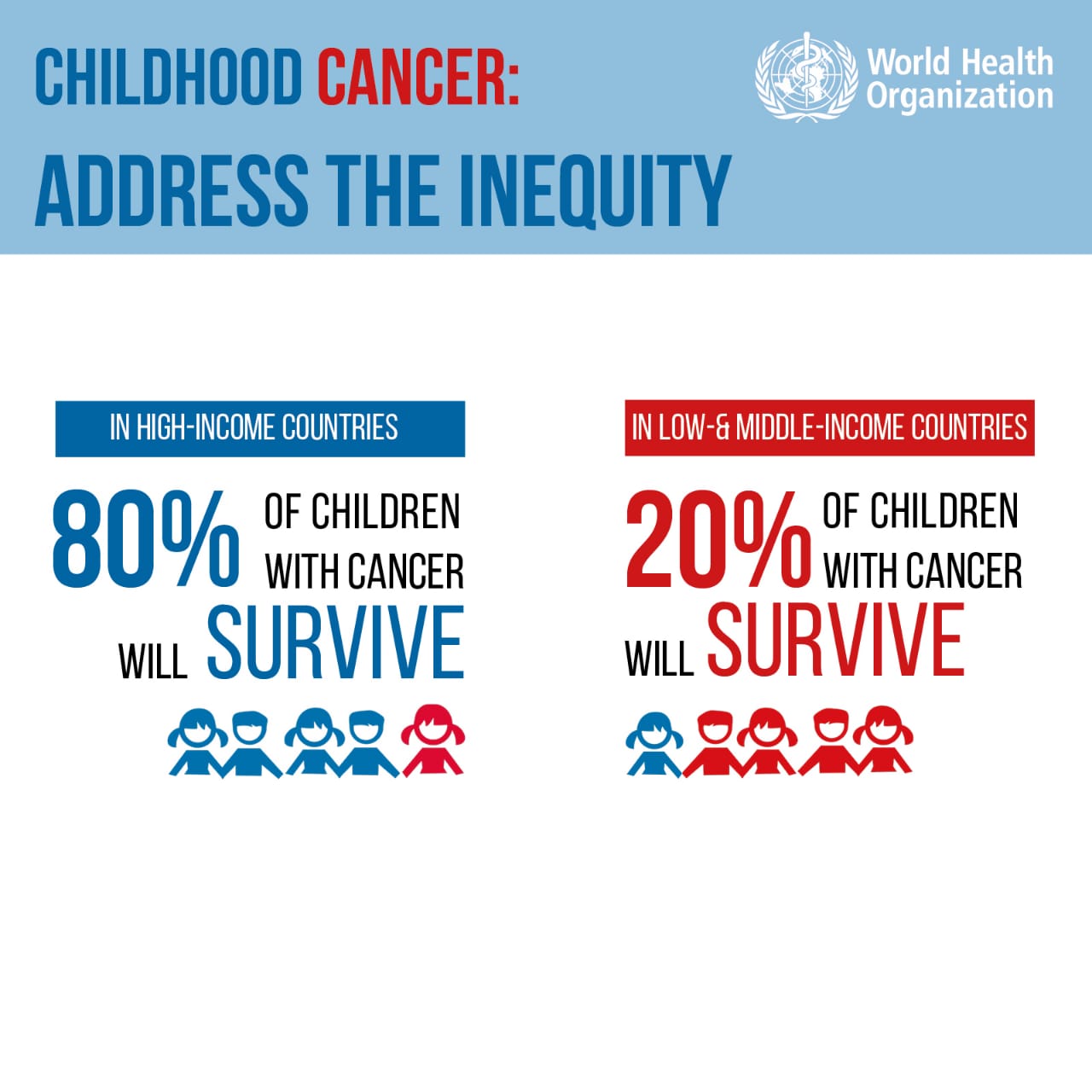
Sadly, childhood cancer continues to be the leading cause of non-communicable related death in children throughout the world. Globally, more than 300,000 children are diagnosed with cancer each year. Approximately 80 percent of our world’s children with cancer live in low-middle-income countries (LMICs) where more than 80 percent of these children die of their disease. In developed countries like the United States, Canada, United Kingdom, Japan and others, more than 80 percent of children survive cancer with hope to live productive and meaningful lives. 

On December 13, 2017 a new report from WHO and the World bank revealed that approximately half of the world’s population, including children, do not have access to essential health services and that 800 million people spend at minimum 10 percent of their household income on health-related care. Childhood cancers are often curable but too many children and adolescents have no hope to overcome their disease simply because they were born in a country entrenched in poverty resulting in late diagnosis, lack of access to life-saving essential medicines and appropriate treatment. As childhood cancer organizations, we know only too well that the associated cost to treat a child with cancer can be a burden that too many families simply can’t overcome. We support the need for universal access to essential medicines and healthcare for all children in the world diagnosed with cancer. In order for this to happen, CCI and SIOP agree that making childhood cancer a national and global child health priority is a critical first step towards increasing access to treatment and reducing childhood cancer mortality. 

All children in the world deserve hope for a cure - no matter where they live - not more excuses. We can no longer sweep this issue “under the rug.” Children are the future of our country and our world. Their vitality is the heartbeat of our world, a shared passion that can unite us because our future as a global community depends on it. 

On International Childhood Cancer Day, all members of Childhood Cancer International and SIOP stand united to make childhood cancer a national and global child health priority to ensure there are adequate resources to meet the basic rights of children with cancer. We believe those basic rights for all children diagnosed with cancer include: 

  • The right to early and proper diagnosis;
  • The right to access life-saving essential medicines;
  • The right to appropriate and quality medical treatments, and; 
  • The right to have access to sufficient palliative care;
  • The right to follow up care, services and sustainable livelihood opportunities for survivors. 
There can be no more ‘but.’ United together towards a shared vision we can advance cures, transform care, and instil hope. For further actions please visit the official ICCD 2018 Campaign Website www.internationalchildhoodcancerday.org 

RAISE YOUR VOICE TOGETHER WITH CHILDREN WITH CANCER 
I DESERVE – MY CHILDHOOD MY LIFE

New Delhi 15th February 2018 
February 15th is celebrated worldwide as International Childhood Cancer Day – aimed at creating awareness and advocating for childhood cancer as much for honoring the bravery and courage of children fighting cancer in our State, country and worldwide. 

Internationally Childhood Cancer Day is spearheaded by Childhood Cancer International – an umbrella organization of 188 parent, survivor and social support organizations like Cankids, in collaboration with SIOP (International Society of Pediatric Oncologists). http://www.cankidsindia.org/iccd-2018.html

Every year Cankids Kidscan, National Society for Change for Childhood Cancer, and member of Childhood Cancer International (CCI) celebrates ICCD across the country. Last year, 1580 children with cancer from 21 cities across India attended the ICCD celebrations. Children at all centers visited a monument of the city to celebrate ICCD and teachers educated children about the monument and how it symbolizes victory in some battle. The “We Are One” Childhood Cancer solidarity song was translated into regional languages and sung by children in different cities.

This February 15th, 2018 happy to inform you that this year we are doing it in a much bigger and grander way together with many other NGO partners and childhood cancer treating centers. 

Our theme for ICCD is Go Gold India – Mera Haq, Mera Bachpan, Mera Jeevan – I Deserve My Childhood My Life. Families will participate in “I Deserve competitions and we will have kite making activities at the Learning activity Clinics in OPD and Wards, where children will make kites and together with their families write their prayers and messages. Children will be taken for an outing to a park where they can fly kites. The messages on the kite will reflect our theme and advocate to the governments that “Childhood Cancer should be a Child Health Priority in India”. We will be celebrating ICCD at all our 51 centers as well as those of our partners, across India. 

Childhood Cancer is the low hanging fruit for a country’s cancer control program. In 2015 Cankids…KidsCan Launched The Go Gold India- Survivor Led Advocacy Campaign with 8 demands – To make Childhood Cancer Child Health Priority in India- a clear childhood cancer control plan and policy, more and dedicated pediatric oncology cancer centers, better and qualified manpower and health professionals, affordable but quality treatment and drugs, focused interventions for specific childhood cancers that are highly curable like Hodgkins Lymphoma, Retinoblastoma (eye cancer) and Wilms Tumor (kidney cancer), acceptance of the age of childhood cancer upto 18 years of age, and family and civil society engagement

Friday, 16 January 2015

Training Opportunities in Paediatric Oncology

Wish you all a very Happy New Year. As always, at the beginning of each year, I make several resolutions, one of which includes posting on the blog more regularly. This year, over the next few posts, I would like to share with you some national and international collaborative efforts to try and improve the lives of our children with cancer.

Education and training are fundamental to delivering good care to our children with cancer. This need not (and should not) only be a single opportunity but an ongoing effort of continuously updating ourselves. For various reasons, including lack of appropriate opportunities and resources, health professionals in low and middle income countries have been limited in accessing education and training. Internet has gone a long way in addressing this limited access - an excellent example being the volumes and volumes of educational material available for free on the website www.cure4kids.org.

Now the SIOP PODC Education and Training Working Group have initiated a bold and exciting idea of developing a repository of training in paediatric oncology clinical medicine or research intended for health care workers from resource-limited countries https://sites.google.com/site/sioptrainingopportunities/home. Each training opportunity is classified by country as well as by the category of opportunity e.g. nurse training, nutrition training, paediatric oncology fellowship, cancer research, etc. My congratulations to Jeremy and Jaime and Neil for the stellar effort.

Finally, and very importantly, such an initiative can only succeed if we spread the word about such a resource and also submit any such training opportunity we know of, however big or small by clicking on this link


Monday, 7 January 2013

SIOP 2012 - Prize winning presentation from India

It is always a pleasure to get together at SIOP and meet the large contingent from India. I enjoy the interaction and exchange of ideas. I attended my first SIOP conference in Mumbai in 2007 and have gradually turned from spectator to participant. What has been noticeable is the excellent representation from India, both in context of conference participants as well as scientific abstracts.
In 2012 the conference was held at the Barbican in London and among the excellent presentations from across the world, what stood out for me (and I suspect for lots of others) was Shalini Jatia's (a volunteer social worker at Tata Memorial Hospital) clear and passionate presentation on “Predictors of Treatment Refusal and Abandonment and Impact of Personalised Psycho-Socioeconomic Support in Childhood Cancer in a Tertiary Cancer Centre in India”. She received a well deserved ovation and prize.
The key findings are as follows - The prevailing abandonment rates at Tata Memorial Hospital in Mumbai had been 15-20%. In 2009 a data manager was recruited and in 2010 a multi-disciplinary psychosocial support group was set-up with the remit of reducing abandonment of treatment. By a combination of interventions including partial financial support, free accommodation, travel and food support, psycho-social counselling, support for transfusions, the abandonment rate decreased from 10.9% in 2010 to 5.3% in 2011. The risk factors significantly associated with abandonment included age less than 5 years, female gender, educational level of parent, and economic status. Other factors like cancer type, prognosis, treatment duration, distance from centre, family size and language were not associated. Around half of these abandoned families were contacted and the top 3 reasons given for abandonment included – belief in complementary and alternative medicine, financial challenges, and belief in incurability of cancer. Based on the findings of this study, TMH now provides full financial support to all children less than 5 years as well as all female children with cancer.

Monday, 31 October 2011

My Highlights of SIOP 2011


Going to the Annual Congress of SIOP is always a worthwhile experience for me as it allows learning and networking. Also special is the opportunity to engage with the paediatric oncology community from India who I have started to get to know over the years. A welcome recent trend I have noticed is the increased participation of paediatric haem/onc fellows from India as well as paediatric residents with an interest in paed haem/onc. This is likely to be as a result of the several fellowship programmes which are now up and running in India. Again this is a welcome development.

Among others I met Vikas and Mohammed from Sir Ganga Ram Hospital, Narendra from Manipal Hospital, Pinky from BJ Wadia Hospital, Kajal from Tata Memorial Hospital, Sneha from Chattrapati Shahuji Maharaj Medical University (previously known as KGMC) in Lucknow and Vaishnavi from Sri Ramachandra Institute. They made some excellent oral and poster presentations and I look forward to seeing their work in print.

The presentations from India which stood out for me were

Tushar Vora's excellent oral presentation on the Impact of holistic housing care at St Jude India Childcare Centres on morbidity and mortality during treatment of Acute Lymphoblastic Leukaemia. Only 1 out of the 60 children (1.6%) who were provided housing at that centre abandoned treatment compared to 21 out of the other 324 children (6.4%) who were treated at Tata Memorial Hospital at the same time but were not provided housing at St Jude.

Data from AIIMS on the NB96 neuroblastoma protocol over a 14 year period which showed a 3 year overall survival of 60.7% (Stage 1 and 2 - 100%, stage 3 - 71.5% and stage 4 - 35.7%). 56.9% of stage 3 patient and 17.6% of stage 4 patients were in clinical remission.

Mohammed Ramzan's poster from Sir Ganga Ram Hospital (Treatment abandonment is a major hurdle for improving survival in childhood cancer in the developing world) showed data on 146 parent of children with cancer who had abandoned treatment and 57 (40%) of these children had died. When they were interviewed on the phone, 28 of them had opted for no further treatment for their children (of which 24 died), 27 had opted for alternative treqatment (and 12 had died), and 78 had opted for chemotherapy at another centre (of whom 21 had died).

On a final note, I was still looking for that elusive multi-centre study from India which has yet to materialise. Perhaps London 2012 ........

Wednesday, 29 June 2011

Abandonment of treatment for childhood cancer: A Position Statement by the SIOP PODC Working Group

When I look at the outcomes of children with cancer in developing countries including India and try to understand the survival gap with that seen in the developed world, the one fact which strikes me most is the high level of children with cancer who abandon treatment. This is as much a social issue as it is a medical one. There is a need to recognise this, measure it, report it and then tackle it. In this regard, I would like to bring to your attention, the recently published position statement of the SIOP PODC Abandonment of Treatment of Working Group (Mostert et al, 2011).
"Almost 80% of children with cancer in resource-rich countries can be cured by timely, intensive multimodality treatment and robust supportive care. However, only 20% of the world's children with cancer live in these countries; the remaining 80% reside in resource-poor nations and have a substantially lower chance of survival. Abandonment of treatment is a major cause of therapeutic failure in these resource-poor countries, affecting up to 50—60% of cases.4 Abandonment constitutes failure to start or complete curative treatment (except in situations when such treatment is contraindicated for medical reasons—eg, the patient is too ill).
At the 2010 Congress of the International Society of Pediatric Oncology (SIOP), the Abandonment of Treatment Working Group was established as one of 12 new working groups within the Pediatric Oncology in Developing Countries (PODC) structure. Its aims are to: heighten awareness of abandonment as a major cause of treatment failure in resource-poor countries; to elucidate the contributing factors; and to identify and widely disseminate effective solutions. To enable comparisons of studies worldwide, the international paediatric oncology community must adopt consistent terminology and reliably identify and document abandonment. Only in this way can the magnitude of the global problem be measured accurately, the underlying causes ascertained, and solutions devised.
For these reasons, the Working Group offers five recommendations. First, we recommend that abandonment of treatment be documented as an adverse event in childhood cancer studies in resource-poor countries. Patients who do not begin or complete treatment should not be excluded from survival analyses. Event-free survival should be analysed in two ways: by treating abandonment as an adverse event and by censoring cases at the time of abandonment. Because some children might be cured if they abandon treatment after completing most of their planned therapy, these two estimates will reflect the upper and lower bounds of the true event-free survival estimate. Second, we propose that abandonment of treatment be defined as failure either to begin (conventionally termed refusal) or to continue the planned course (abandonment), because both are likely to have related underlying causes and could benefit from similar interventions. However, the timing of abandonment should be documented to help to identify related factors. Third, treatment in resource-poor settings might be interrupted for various reasons, including financial and transportation difficulties. When such interruptions herald full abandonment and what the effect on outcomes will be are difficult to predict. We suggest that abandonment of treatment be defined as a hiatus of 4 or more weeks in the scheduled treatment; this period is based on empirical evidence and on anecdotal observations that, after an absence of this length, patients are unlikely to return. In the rare event that patients do return after a prolonged interruption, the treatment options might be limited in the setting of refractory disease or imminent death. Further research will help to establish whether this 4-week working definition needs revision. Fourth, we recommend that abandonment of treatment should be used only in the context of treatment given with the intention of cure. However, if palliation is the only achievable goal because of disease factors or poor socioeconomic conditions (particularly relevant in resource-poor countries), these children must be documented carefully, tracked, and analysed to elucidate the reasons underlying the administration of solely palliative, symptomatic, or end-of-life care to children with curable cancers. Finally, the Working Group recognises that some might perceive the term abandonment of treatment as implying that the patients and their parents are solely responsible; we emphasise that this is not the case. Abandonment of treatment is as much a socioeconomic issue as a medical one, and is often the result of various factors beyond the control of the patients and parents.
Abandonment of treatment can no longer be ignored by the international paediatric oncology community. The members of our Working Group offer these recommendations in the belief that all children with cancer have the right to an equitable chance of survival."

Monday, 25 October 2010

My highlights of SIOP 2010 in Boston


I hope that all those of you who had a chance to attend this year's SIOP meeting in Boston at the Hynes Convention Centre had a great time. It was a personal pleasure to meet so many of my old friends and make new ones. There was a good representation of the paediatric oncology community from India as well as many from the Indian diaspora.

There were 45 presentations (8 oral and 37 poster) from India and I had a chance to hear and see several of them. My personal highlight was Dr Kurkure's presentation on L0w cost rationally designed protocol for treatment of pediatric acute lymphoblastic leukemia in developing countries which was used in motivated families below poverty line at Tata Memorial Hospital. This protocol had a 3 drug induction (VCR, L-Asp, Dex) and 91% of children were in clinical remission at the end of induction. The event-free survival for standard risk patients was 63% (median follow-up 22 months) and for high risk patients was 48% (median follow-up 31 months). Remarkably, only 3% of children abandoned treatment during induction and 1% following induction.


The other presentation I really enjoyed was by Dr Vinay Jain on Building capacity in pediatric oncology in India: efforts of Jiv Daya Foundation 2008-2010 which gave a summary of the excellent work that he and his foundation have done over the last few years in several centres in India. More details of their work can be found on www.jivdayafound.org.

Finally, I heard with great interest two related presentations by Paola Freidrich-Medina who is a fellow at the Dana-Farber Cancer Institute. She was presenting the work done by AHOPCA (Asociacion de Hemato-Oncologica Pediatrica de Centro America) which is collection of seven resource-limited countries from Central America. The presentations were Current barriers for successful treatment of children with sarcomas in low-income countries and High tumor burden, high rate of abandonment and fear of disabling surgery are among the innermost barriers to treatment of pediatric sarcomas in resource-limited settings.

I welcome your thoughts and your highlights of the meeting. If there are any photographs that you want to share from the meeting on this blog, you can email them to me.